Photos Of Aircraft Carriers - Although every effort has been made to follow the citation style rules, there may be some inconsistencies. If you have questions, see the appropriate style guide or other sources.
An aircraft carrier is a military ship from which aircraft can take off and land. Basically, an aircraft carrier is an airfield at sea. Special features include catapults in the cockpit to help launch the aircraft; for braking during landing, aircraft are equipped with retractable hooks that connect cables on the deck.
Photos Of Aircraft Carriers
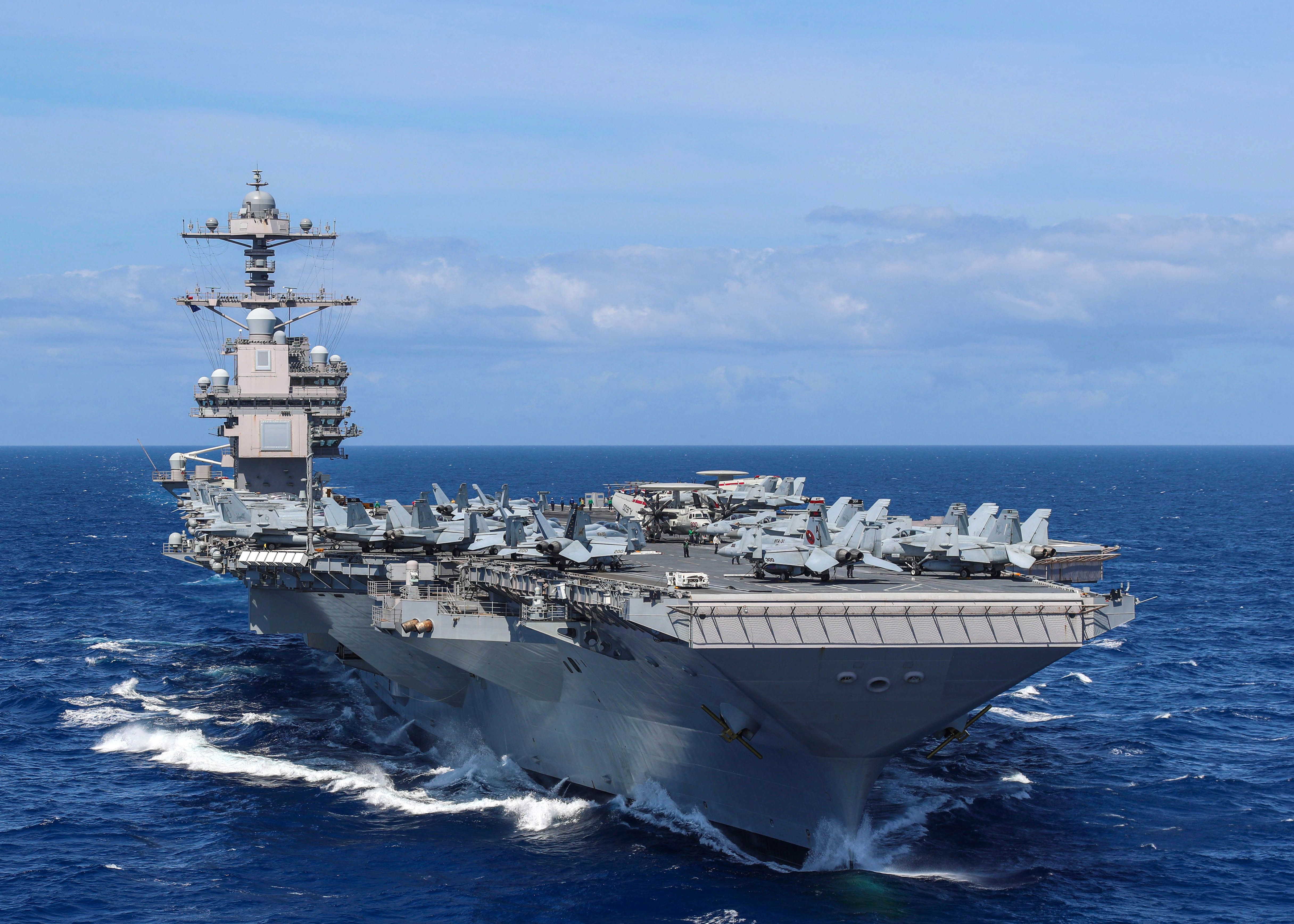
Who was the first pilot to take off from a platform on a ship, the forerunner of the aircraft carrier?
World's Largest Aircraft Carrier, Uss Gerald R. Ford, To Deploy For First Time
American civilian Eugene Ely was the first pilot to fly an aircraft from a specially constructed platform on the deck of a US cruiser.
In Hampton Roads, Virginia in 1910. in November. This experimental platform led to the development of a real aircraft carrier.
Aircraft carriers have been in use since the early stages of World War II. She became the dominant battleship after the 1941 December 7th Japanese attack on Pearl Harbor showed her potential. They also played important roles in the battles of Midway Island, the Coral Sea and Leyte Gulf.
During World War I, the British Navy developed the first true aircraft carrier with an unstoppable flight deck, the HMS.
Congress' Demands For Nuclear Powered Aircraft Carriers Are Sinking The Navy
In 1922 was commissioned in December, being the first carrier built in this way from the keel up.
An aircraft carrier, a naval vessel from which aircraft can take off and land. Back in November 1910, American civilian pilot Eugene Ely flew in a plane from a specially built platform on the deck of a US cruiser.
In Hampton Roads, Virginia. in 1911 January 18 In San Francisco Bay, Ely landed on a platform built on the battleship's quarter deck.

Using cables attached to sandbags on the platform as restraint equipment; then depart from the same ship.
Here's Why Navy Aircraft Carriers Can't Help Ukraine
The British Navy also experimented with carriers; During World War I, it developed the first true carrier with an unstoppable flight deck, the HMS
It was possible, but the US and Japanese navies quickly followed the British lead. The first US carrier, a modified propeller, was named USS
Essentially, the carrier is an airfield at sea with many special features required by the limited size and environment in which it operates. To facilitate short take-offs and landings, the air speed above the deck is increased by turning the ship into the wind. Catapults, flush with the cockpit, help start the plane; for landing, the plane is equipped with a retractable hook that connects the cross cable in the group, braking to a quick stop.
The operator's control center is located in the superstructure ("island") on one side of the cockpit. The landing of the aircraft is carried out with the help of radio and radar and visual signals from the deck.
Photos Of America's Aircraft Carriers
Carriers were first used in combat during the early stages of World War II. in 1941 December 7 The Japanese attack on Pearl Harbor by aircraft carriers dramatically demonstrated the potential of the aircraft carrier, which later became the dominant battleship. These carriers played important roles in naval battles in the Pacific theater such as Midway Island, the Coral Sea and Leyte Gulf.
Carriers built after the war were larger and had armored cockpits. Jets pose serious problems because they weigh more, accelerate slower, landing speeds are higher and fuel consumption is higher. Three British innovations contributed to solving the problem: the steam-powered catapult, the tilting or tilting crew, and the landing mirror signaling system.
Released in the US. They do not need to remove fuel bunkers, smokestacks and exhaust channels occupied by previous operators.
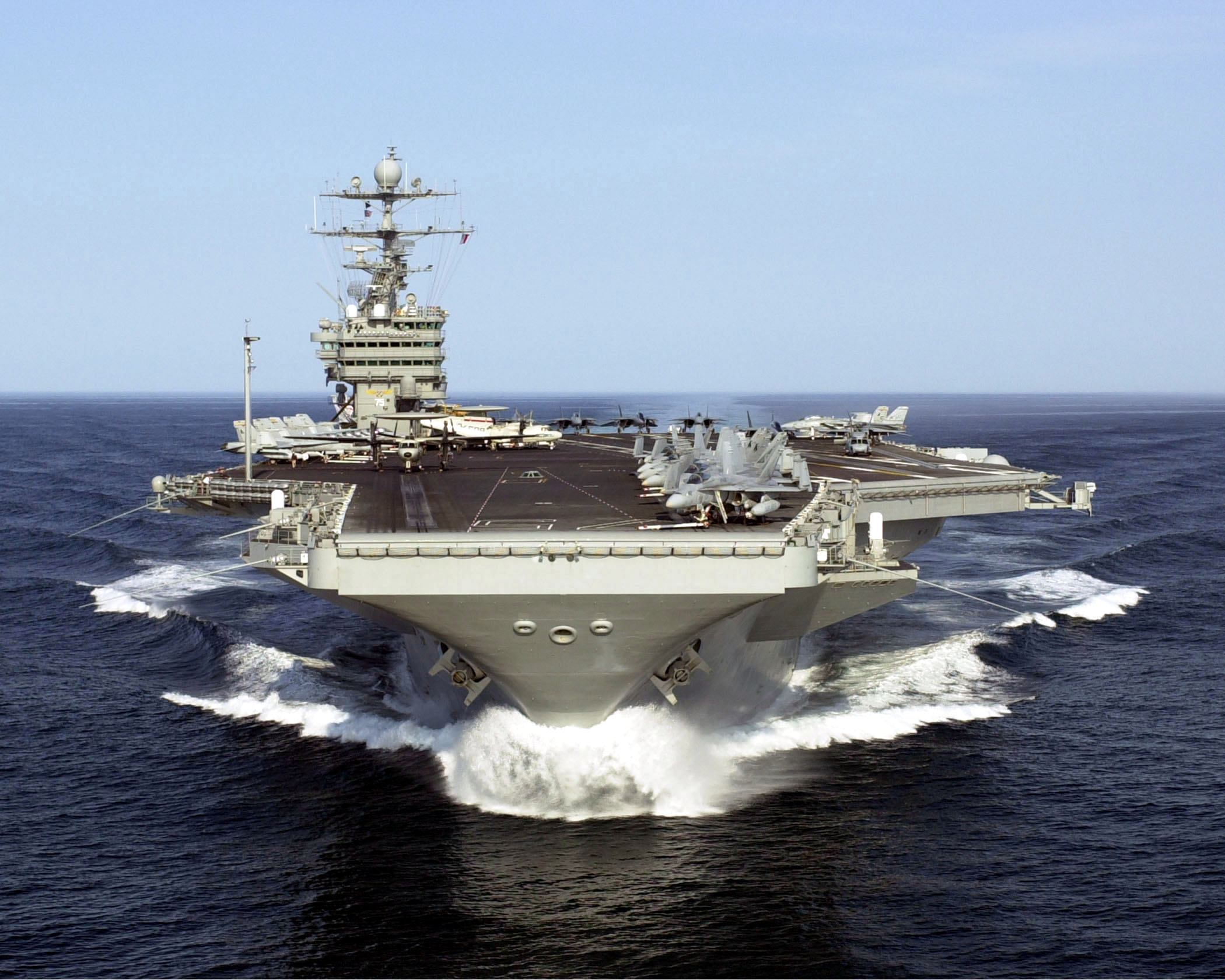
Design modifications later created variants such as light carriers equipped with extensive electronic equipment to detect submarines, and helicopter carriers for amphibious assaults. Another change was to replace the missile armament with more anti-aircraft weapons. Operators with shared capabilities are classified as multipurpose operators. (LHA-7) has been studying how the large American-class amphibious assault ship can work better together with a strike group, the commander of the US 7th Fleet said on Friday.
After The Aircraft Carrier: 3 Alternatives To The Navy's Vulnerable Flattops
Has experimented with some so-called "attack carrier" concepts, Vice Adm. Karl Thomas at an event hosted by the Center for Strategic and International Studies and the US Naval Institute.
"One day you can have an F-35B on the flight deck, tomorrow you can have an MV-22 and you can put Marines on the ground. So it's just a versatile instrument, and having 14 5th generation fighters on board, it's an incredibly powerful sensor ,” Thomas said. "So we are still in the experimental stage. We wanted to at least try to understand how you would combine an attack carrier with a full-sized carrier. What missions can we do?
Is part of the evolution of the Navy and Marine Corps Lightning Ship concept for large-deck amphibious warfare ships. in June,
"We found three big decks for a while," Thomas said of Valiant Shield.
Sea Eagle: America's Plan To Put The F 15 On Aircraft Carriers
"There's a mission aircraft that I think is going to do well. I think there are areas where it could be better. And then I think because of the vertical takeoff nature of the F-35, you might find that if you put the F-35s into [Expeditionary Advanced Base Operations] and maybe bring it back to the ship for maintenance and move to another place." He added. "Maybe you strap it to the operator and use command and control electronic countermeasures [E2-D Advanced Hawkeye and EA-18G Growlers]. So we're still in the experimental phase.
US 7th Fleet Commander Vice Adm. Karl Thomas talks with the crew of the mine countermeasures ship USS Pioneer (MCM-9) aboard the 1MC in 2022. June 9 US Navy photo.
Thomas noted the British Royal Navy's experiments with US Marine Corps F-35Bs and Royal Air Force F-35B squadrons operating from the carrier HMS.
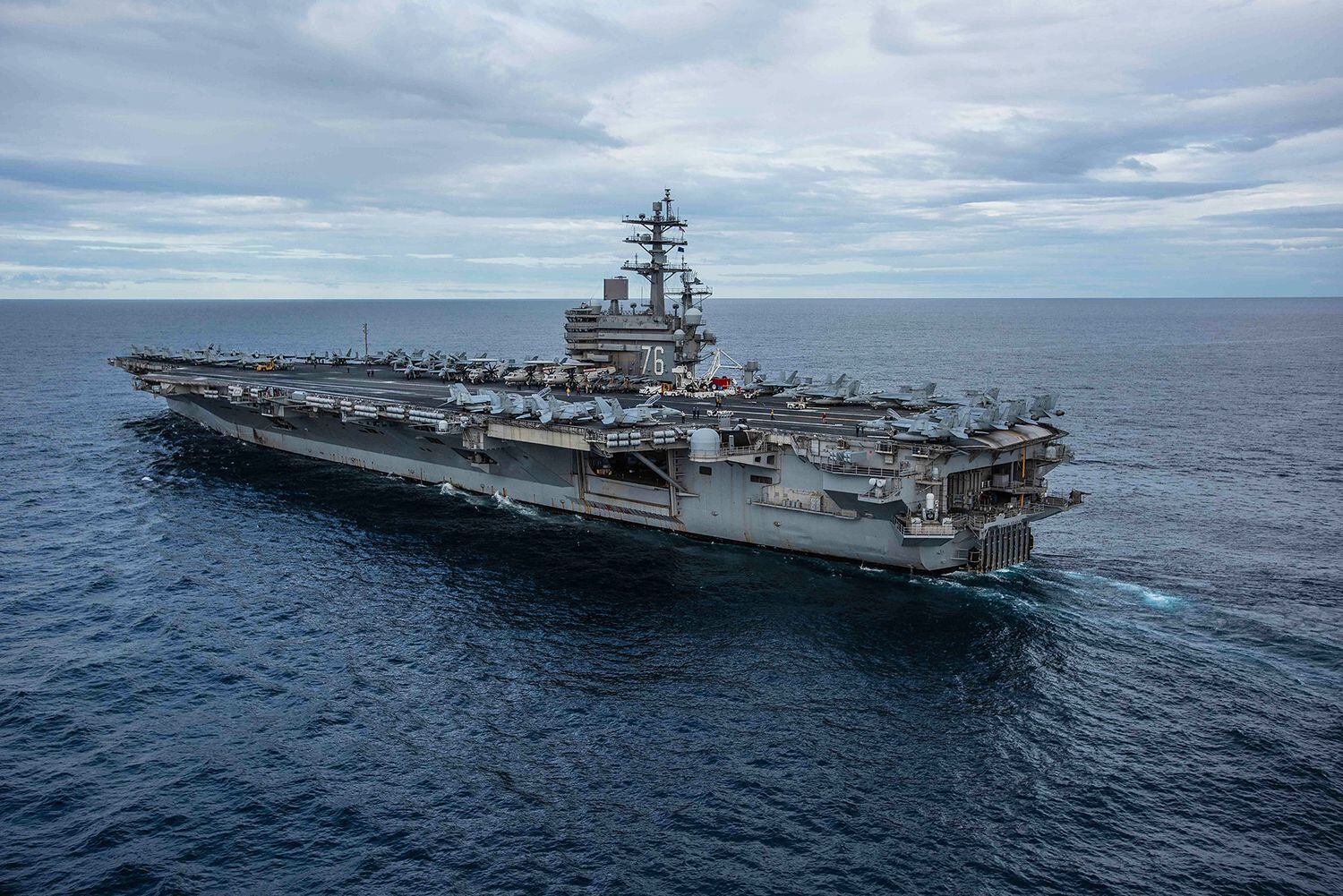
"So it also allows our allies and partners to see the capabilities we can have with the F-35B on flat surfaces," he said.
U.s. Carriers In South China Sea, Taiwan Reports Further Chinese Incursion
Thomas also discussed Beijing's reaction to House Speaker Nancy Pelosi's (D-Calif.) visit to Taiwan earlier this year. He described the military drills and rocket fire in response to the visit as "irresponsible".
"I think we have an obligation under the Taiwan Relations Act to provide Taiwan with a defense capability and make sure we are ready and we are ready." Our desire is to resolve the cross-strait differences peacefully," he said. "The PRC says it wants to, but when you see them firing ballistic missiles at Taiwan and landing on shipping companies and shipping lines, and some of them actually landed in Japan's EEZ - that's why I added the word." , irresponsible".
Thomas also pointed to last week's trilateral ballistic missile drills between the US, Japan and South Korea in the Sea of Japan after North Korea fired an intermediate-range ballistic missile at Japan.
"Of course, Japan itself is looking at ballistic missile defense. But I also want to say that the PRC has ballistic missiles," said Thomas.
Aircraft Carriers, Their Point, Purpose And Power
"We have ballistic missile defense not only to protect our allies and partners, but also to protect ourselves and our ships are very capable." So with ballistic missile defense capabilities, I just want a few areas on each [cruiser-destroyer]. Gaulle (French Navy), USS John F. Knedy, helicopter carrier HMS Ocean and escort ships, 2002.
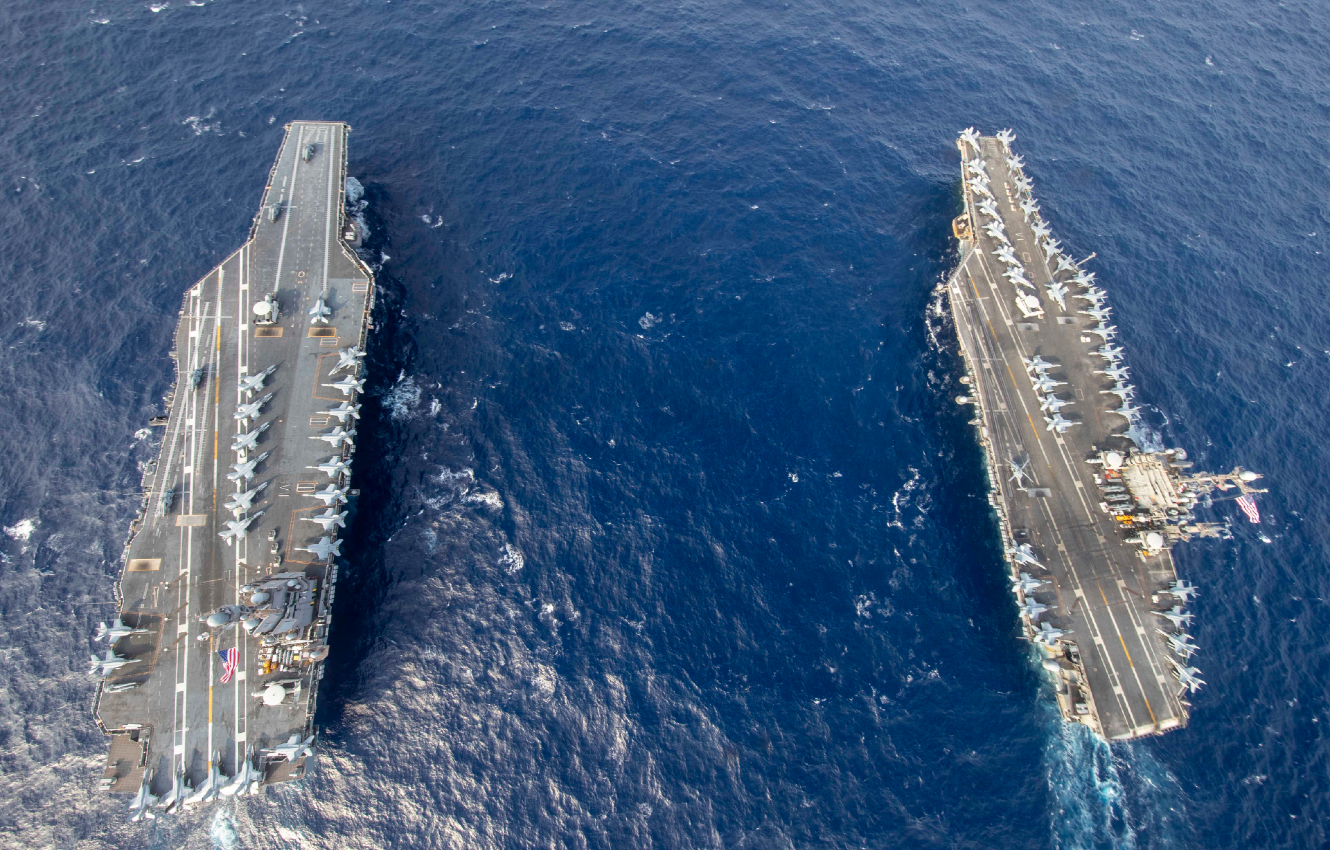
An aircraft carrier is a warship used as a naval air base with a full flight deck and equipment for the transport, arming, deployment and recovery of aircraft.
It is usually the flagship of the fleet because it allows the navy to generate air power around the world without having to rely on local bases to conduct aircraft operations. Since its inception in the early twentieth century, carriers have evolved from wooden ships used to deploy hot air balloons to nuclear warships carrying fighter jets, strike aircraft, helicopters and other types of aircraft. Although heavier aircraft such as fixed-wing fighters and bombers are launched from aircraft carriers, they do not board carriers. With diplomatic and tactical power, mobility, autonomy and flexibility, aircraft carriers are often the centerpiece of modern combat fleets. Tactically or strategically, the ship replaces the warship in its role as the flagship of the fleet. One of the biggest advantages is that it does not interfere with territorial sovereignty when sailing in international waters and thus does not require a third party permission to fly, reducing flight time and transit distance, which leads to a significant increase in time. availability in the combat zone.
And modern navies use several variants of the type. These variants are sometimes classified as subtypes
Assault Carrier' Tests Show How Marine F 35bs Can Operate With Navy Aircraft Carriers, Says 7th Fleet Commander
Uss aircraft carriers, aircraft carriers model kits, aircraft carriers, aircraft carriers photos, us aircraft carriers names, us navy aircraft carriers, navy aircraft carriers, active us aircraft carriers, rc aircraft carriers, aircraft carriers for sale, museum aircraft carriers, photos of us aircraft carriers

0 Comments